Interim Cleaning, “Deep Cleaning,” and the Language That Quietly Shaped an Industry
Intro Summary
This article explores how language has influenced the way commercial carpet cleaning strategies are interpreted across the industry. Terms like routine, interim, restorative, and “deep cleaning” are frequently used inconsistently or tied to specific methods rather than to the soil conditions they are meant to address. By reconnecting these terms to soil state and cleaning intensity, the article provides a clearer framework for understanding how cleaning strategies function within a complete commercial carpet maintenance program.
How Language Shaped Commercial Carpet Cleaning
For more than two decades, the commercial carpet cleaning industry has struggled, not with technology, but with terminology.
Words like interim, deep, restorative, and maintenance have been used interchangeably, method-biased, or emotionally charged, often leading to confusion among cleaners, manufacturers, facility managers, and specifiers alike.
This article is not about assigning blame. It is about restoring alignment between language, science, and practice.
Cleaning vs. Maintenance: The First Distinction We Missed

Cleaning is an event.
Maintenance is a system.
A cleaning event is performed to completion. A maintenance program is the coordinated use of multiple cleaning strategies over time.
This distinction matters, because many industry debates incorrectly treat individual methods as if they exist in isolation, rather than as components of a broader maintenance system.
The Three Cleaning Strategies (and What They Actually Mean)
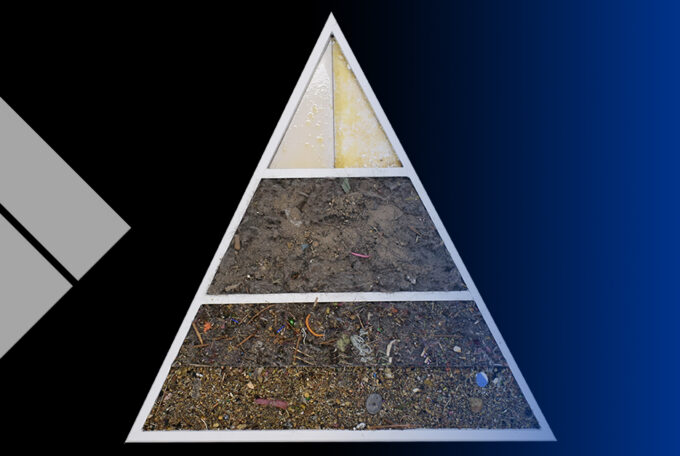
Modern textile floor covering care relies on three strategies, all of which are defined by soil condition and intensity, not by cleaning method.
- Routine Cleaning Strategy
Primary function: removal of dry insoluble soils.
This includes:
- Vacuuming (air entrainment)
- Periodic Pile Lifting or brushing (mechanical entrainment©)
- Daily spot & spill removal as needed (includes water rinse extraction if applicable)
Routine cleaning protects fiber resiliency, limits abrasion, and preserves performance. It is not “light cleaning.” It is foundational cleaning.
- Interim Cleaning Strategy
Primary function: management of soluble soils and binding agents that routine cleaning cannot address alone.
This is where language drift occurred.
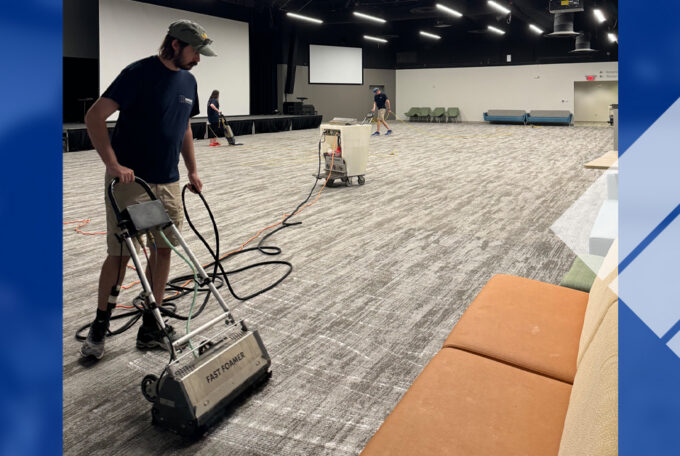
Interim cleaning is not method-specific. Low-moisture systems are commonly used, but scheduled water rinse extraction can also be interim cleaning when applied intentionally and proportionally.
A monthly truckmount cleaning in a restaurant is not “restorative.” It is planned interim cleaning matched to soil load.
The defining feature of interim cleaning is intent and intensity, not moisture level.
- Restorative (Corrective) Cleaning Strategy
Primary function: response to abnormal or unplanned conditions.
Flooding, fire residue, severe neglect, contamination events, these define restorative cleaning. The distinction lies in intensity and circumstance, not equipment choice.
“Deep Cleaning”: A Term That Needs Context
“Deep cleaning” has been used in at least three different ways:
- Health-based deep cleaning: Focused on reducing exposure to fine particulates and bio-pollutants, often best addressed through HEPA filtration, ventilation, and effective dry soil removal.
- Schedule-based deep cleaning: Periodic cleaning beyond daily scope.
- Marketing-based deep cleaning: Often defined by visible wastewater rather than actual soil removal.
Water penetration depth does not define cleaning depth. Soil state and extraction effectiveness do.
The Overlooked Bridge: Mechanical Entrainment
For years, the industry treated cleaning as a binary choice:
- air (vacuuming), or
- water (rinse extraction).
What was quietly under-recognized was the mechanical bridge between them.
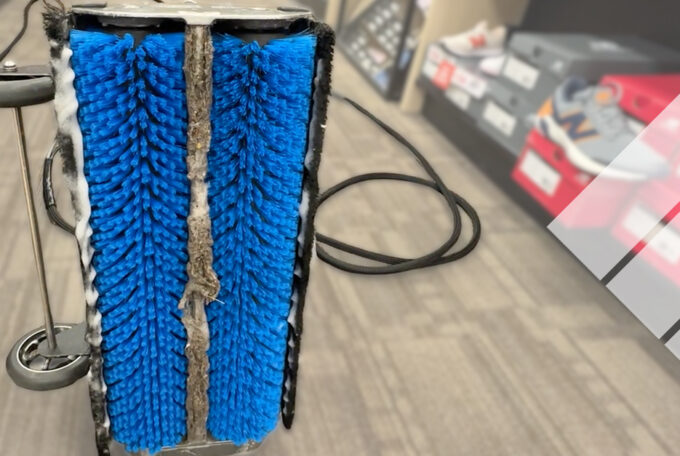
Counter-rotating brush machines and similar systems do more than agitate:
- they dislodge embedded dry soils,
- reset the pile structure,
- and enhance chemical distribution.
This is not merely agitation, it is mechanical extraction.
Encapsulation technologies succeeded because they bundled chemistry with mechanical entrainment, reducing dependence on water volume while increasing overall system efficiency.
Why This Matters Now
Industry standards are living documents. Language shapes practice. Practice shapes outcomes.
Clarifying these definitions does not invalidate past work, it completes it.
Routine and interim strategies, supported by mechanical entrainment and appropriate chemistry, allow carpet to be maintained without inevitable degradation. Restorative cleaning remains available when conditions demand it, not because a schedule failed, but because circumstances changed.
The Path Forward
- Define strategies by soil condition and intensity, not by brand or method
- Recognize mechanical entrainment as a core component of modern maintenance
- Reserve “restorative” for true corrective scenarios
- Treat maintenance as a system, not a sequence of unrelated events
When language aligns with science, the industry moves forward together.
Closing Note
Standards do not advance science, science advances standards.
Our responsibility is to keep the two aligned.